
![What is Tenant Insurance? [Beginner’s Guide]](https://harvardwestern.com/wp-content/uploads/car.png)
![What is Tenant Insurance? [Beginner’s Guide]](https://harvardwestern.com/wp-content/uploads/home.png)
![What is Tenant Insurance? [Beginner’s Guide]](https://harvardwestern.com/wp-content/uploads/plane.png)
![What is Tenant Insurance? [Beginner’s Guide]](https://harvardwestern.com/wp-content/uploads/briefcase.png)
![What is Tenant Insurance? [Beginner’s Guide]](https://harvardwestern.com/wp-content/uploads/tractor.png)
![What is Tenant Insurance? [Beginner’s Guide]](https://harvardwestern.com/wp-content/uploads/cardiogram.png)
![What is Tenant Insurance? [Beginner’s Guide]](https://harvardwestern.com/wp-content/uploads/group-benefits.svg)


What is Tenant Insurance? [Beginner’s Guide]
Did you know that over 40% of Canadian renters don’t have tenant insurance? Even more troubling is that many renters wrongly believe their landlord’s insurance policy protects them. This common misconception could cost you thousands of dollars in the event of a loss. The truth is that your landlord’s insurance only covers the building structure itself, not your personal belongings or any liability risks you might face.
While not always mandatory in Saskatchewan, renters’ insurance is fundamental for safeguarding against unforeseen damages and liability claims.
Financial Impact of a Loss for Renters:
51%
Would struggle to replace their belongings
49%
Would be able to recover without insurance
Ready to start your quote online?
Tenant insurance remains surprisingly affordable, typically costing between $25 and $35 per month,. Get a personalized rate and buy your coverage online whenever it’s convenient for you.
*Quick, secure, and hassle-free coverage tailored to your rental.
Overview of Tenant Insurance
- Who’s Covered: The policy extends protection to the tenant, immediate relatives, dependents, and additional listed insureds.
- What’s Covered: Below are the key coverages included in tenant insurance policies.
Your Belongings ✓ Included
Starts at $30,000 minimum coverage for your furniture, clothing, appliances, and personal items against named perils, including fire, smoke, theft, water damage, and more.
Personal Liability ✓ Included
Protects you if someone gets injured in your rental or you accidentally damage someone else’s property. Starts at $1 million with options up to $5 million; this is the most affordable coverage on your policy!
Additional Living Expenses ✓ Included
Helps with hotel stays and meal costs if your rental becomes uninhabitable due to a covered loss. Typically covers up to 30 days for situations like mass evacuations.
Identity Theft ✓ Included
Covers expenses related to identity theft, including lost wages, document replacement, credit reports, and certain legal costs.
Optional Add-On Coverages
- Sewer Back-Up: Protects your belongings from damage caused by backed-up sewers or sump pump failure.
- Overland Water: Covers damage from freshwater flooding, like when heavy rainfall or rapid snowmelt causes water to enter your rental unit.
- Home Systems: Provides coverage for sudden and accidental breakdown of home systems and equipment like your refrigerator, stove, or other appliances.
- Glass Buy-Down Deductible: Lowers your deductible specifically for glass-related claims, making it more affordable to fix broken windows or door glass.
- Scheduled Items: Offers higher coverage limits for valuable items, including collections, jewelry, instruments, and other specialty items that exceed standard coverage limits.
This information is meant to give you a general idea of what’s typically covered and is referenced from SGI Canada. The specifics of your coverage, including limits and exclusions, will be detailed in your actual policy documents.
Saskatchewan law doesn’t require tenant insurance, but many landlords make it a must in their lease agreements. This requirement helps both the landlord and the tenant by providing financial protection when unexpected things happen.
The law might not require it, but tenant insurance is nowhere near as expensive as homeowners insurance because it doesn’t cover the building structure. The protection you get is worth much more than what you’ll pay for it.
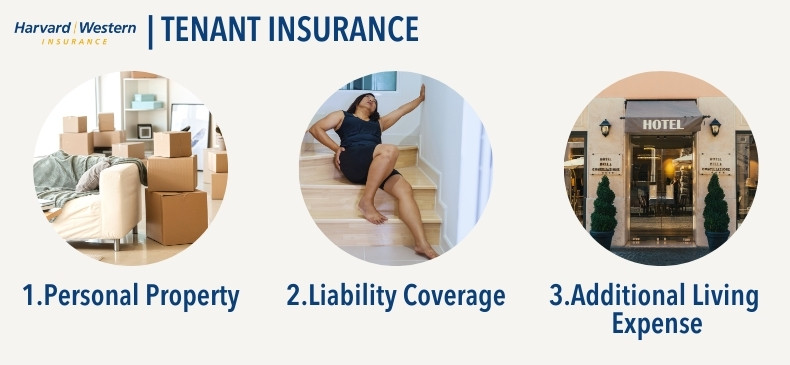
What is Tenant Insurance?
1
Personal Belongings Coverage
Protects your stuff from theft, fire, or water damage, both inside your apartment and while you travel.
Protects your stuff from theft, fire, or water damage, both inside your apartment and while you travel.
- For furniture, electronics, clothing, and appliances you own.
- Includes specific limits for high-value items like jewelry and sporting gear.
- Example: Someone breaks into your car and steals your laptop, or a burst pipe ruins your couch.
2
Liability Coverage
Pays for legal defence and damages if you accidentally injure someone or damage a neighbour’s property anywhere in the world.
Pays for legal defence and damages if you accidentally injure someone or damage a neighbour’s property anywhere in the world.
- For accidental property damage and personal injuries.
- Handles legal fees and payout costs up to your policy limit.
- Example: A guest slips on your kitchen floor, or an accidental kitchen fire damages neighbouring units.
3
Additional Living Expenses
Covers the extra costs of temporary housing if your rental becomes unlivable due to a covered incident.
Covers the extra costs of temporary housing if your rental becomes unlivable due to a covered incident.
- For temporary shelter while repairs are made or until you relocate.
- Helps cover extra daily expenses like eating out when you don’t have a kitchen.
- Example: An apartment fire forces you out, and you need a hotel room and meal money for two weeks.

How to Choose Your Belongings Limit
With SGI CANADA, tenant policies start at a minimum coverage limit of $30,000. While that might sound like plenty, most renters are surprised by how quickly their items add up when factoring in today’s prices.
The Replacement Cost Rule: Don’t base your total on what you paid years ago or what you’d sell items for on Kijiji. Calculate what it would cost to buy everything brand new off the shelf today.
Quick Tips to Calculate Your Total:
- Go Room by Room: Walk through your space and do a quick mental tally of furniture, clothing, kitchen appliances, and electronics.
- Check Your Closet: The average wardrobe costs significantly more to replace than most people realize; don’t forget shoes, coats, and formalwear.
- Snap Quick Photos or Videos: Open up drawers and closets and record a 2-minute video on your phone. It takes minimal time and serves as a simple record if you ever need to make a claim.
Benefits of Renter’s Insurance for Your Dorm | August 24, 2024
Ways to Save on Tenant Insurance
Saving on tenants’ insurance doesn’t mean compromising on coverage. Here are strategic ways to ensure you’re getting the best value for your renter’s insurance:
Money-Saving Strategies for Tenant Insurance:
- Compare: Start by comparing quotes. Our HWICLICK portal offers competitive rates starting at just $25/month, making it a great starting point for affordable coverage.
- Increase Your Deductible: Opting for a higher deductible can significantly lower your monthly premiums.
- Look for Discounts: Many providers offer discounts for various reasons, such as being claims-free, installing a centrally monitored alarm, or applying a credit score discount.
- Annual Payments: Paying your premium annually rather than monthly can save on interest and administrative fees, making it a cost-effective option in the long run.
- Review Annually: Insurance needs can change. Regularly reviewing your policy ensures you’re only paying for the coverage you need.
Disclaimer: These summaries are for educational purposes and do not replace the legal language of your specific insurance contract. The information provided in this article is intended for general informational purposes only and should not be construed as professional advice. This information should not be used as a substitute for personalized guidance from qualified professionals.
FAQs
Is tenant insurance required for every individual renting a property?
Tenant insurance is not legally required, but it is strongly advised for all renters, whether in a house or an apartment. However, your landlord can stipulate in your lease agreement that you are required to obtain a policy. Be sure to ask the landlord whose names of the occupants that are renting are legally required to be on the policy.
What are the primary protections included in tenant insurance?
Tenant insurance typically includes three key types of coverage: personal liability insurance, which protects you in case you’re held responsible for injury or property damage; additional living expenses, which covers costs if your rental becomes uninhabitable; and contents coverage, which insures your personal belongings against loss or damage.
Why do landlords require tenants to have insurance?
Landlords typically require tenants to have insurance to ensure that there is adequate coverage in place if they are found liable in the event of damage or other issues. This protects both the tenant and the landlord from being financially responsible for the costs associated with such damage.
How does tenant insurance differ from a landlord’s insurance?
While a landlord’s insurance typically covers the building structure, tenant insurance focuses on protecting your personal possessions and liability. Your landlord’s policy won’t cover your belongings or personal liability, making tenant insurance essential for comprehensive protection.
Is tenant insurance mandatory in Canada?
Tenant insurance is not legally required in most parts of Canada. However, many landlords now include it as a condition in lease agreements.
Stay Connected With Harvard Western
Thanks for reading our article; I hope you enjoyed this month’s topic on defining what tenant insurance is. Here are some more ways to access more insurance information and tips:
1.
Visit our Blog/article page each month, where we publish various insurance articles and share information on specific industry products.
2.
Learn more about Renter Insurance and visit our product page for comprehensive information.
3.
Follow us on LinkedIn to stay up to date on the latest business insurance articles and follow our company updates.
Last updated:
Posted in Home & Tenant on January 16, 2025 by Harvard Western Insurance
Share:
Tweet