


Dairy Farm Insurance: A Guide to Herd & Asset Protection
Running a dairy farm is an ambitious endeavour with its fair share of risks. From livestock health to complex machinery, having the right insurance coverage in place is crucial to ensure long-term success.
Table of Contents
The Risks Faced by Dairy Farmers
Dairy operations have unique vulnerabilities that can halt revenue in an instant. Common risks include:
- Livestock Loss: Beyond accidental death, theft and specific diseases can devastate a herd’s profitability.
- Property & Facility Damage: Fires in milking parlours or barns can result in total production loss.
- Mechanical Failure: Automated systems are the backbone of modern dairy; a simple electrical surge can stop operations.
Key Fact: Standard property forms often exclude “dairy products.” Specialized endorsements are required to protect your milk against contamination or spoilage.
Livestock & Machinery Coverage
1. Farm Livestock (Named Perils)
This protects your herd against “death or destruction” from specific events like fire, lightning, or explosion. Per SGI CANADA guidelines, you can choose between:
- Scheduled Coverage: Best for high-value cattle listed individually on the policy.
- Blanket Coverage: A set total limit for the herd, often subject to a per-head limit.
Pro Tip: Consider adding “Entrapment” or “Loading/Unloading” endorsements for more comprehensive protection.
2. Machinery & Equipment
Coverage for tractors, milking equipment, and tools. Under the Broad Form, “Tools” used for repair and maintenance are typically insured as a blanket amount rather than scheduled individually.
Milk and Property Protection
3. The Milk Gap: Spoilage & Contamination
Dairy farmers need a specific Milk Contamination & Spoilage endorsement. This coverage steps in during two common “nightmare scenarios”:
- Mechanical Spoilage: If your refrigeration equipment breaks down due to an insured peril, the policy helps cover the value of the milk that had to be dumped.
- The Contamination Chain: If a single cow being treated with antibiotics is accidentally milked into the main tank, the entire batch is ruined. This endorsement is designed to protect you from the massive financial hit of destroying that “hot” milk before it reaches the processor.
4. Farmer’s Liability: Protecting Your Name
Between feed deliveries, milk truck pick-ups, and the daily movement of large, unpredictable livestock, the potential for an accident is everywhere. Standard personal liability isn’t enough; you need Farm General Liability.
This coverage is your shield against two main threats:
- Bodily Injury: If a delivery driver slips on a slick parlour floor or is injured by an animal, you could be held legally responsible for their medical bills and lost wages.
- Property Damage: If your cattle break through a fence and wander onto a highway, causing a collision, or damage a neighbour’s expensive crop, your liability coverage is what stands between you and a devastating lawsuit.
Managing Cold Stress & Extreme Weather
The Battle for Body Heat: Preventing Cold Stress
Saskatchewan winters are more than just a discomfort for dairy herds; they are a direct threat to the bottom line. As highlighted in Farming for Tomorrow, every dairy cow has a “thermoneutral zone.” This is the temperature sweet spot where the animal doesn’t need to burn extra energy to stay warm. For a high-producing dairy cow, that lower limit (the Lower Critical Temperature) is often around -15°C.
Once the mercury drops below that line, the cow’s internal priorities shift. Instead of using nutrients to produce milk, she begins “burning” those calories just to maintain her body temperature. Experts note that “energy that was intended for milk production is now diverted to heat production,” leading to an immediate dip in the bulk tank.
It is important to note: This loss of milk production is a management risk and is not covered by your insurance policy; coverage only triggers in the event of death or physical destruction.
Strategic Protection for the Herd:
- Caloric Defence: To counter cold stress, farmers must provide high-quality forage. A cow with a full rumen is essentially carrying its own internal heater, but if production runs low, the financial loss is yours to bear.
- The Danger of Dampness: Dryness is just as vital as heat. A wet coat loses its insulating power almost instantly. “Keeping animals dry and out of the wind is half the battle.” This means refreshing bedding more frequently so the herd isn’t resting on frozen or damp surfaces.
- Wind Protection: A -20°C day is manageable; a -20°C day with a 40km/h wind is a crisis. Sturdy windbreaks are your first line of defence against frostbitten teats and respiratory issues.
What if a Cow Freezes?
Under SGI CANADA’s Farm Livestock Form, coverage is provided for “death or destruction.” If extreme weather leads to the actual death of an animal, coverage may apply depending on your specific named perils (such as fire, lightning, or a building collapsing from ice). However, insurance will not compensate you for the drop in milk volume caused by a cold cow.
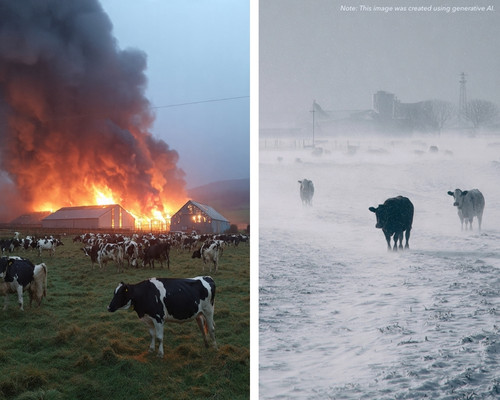
Case Study: The Blackwell Dairy Fire
The Ripple Effect: Lessons from the Blackwell Dairy Fire
Imagine the heart of your operation, the processing plant or milking parlour, reduced to rubble overnight. That was the reality for Blackwell Dairy in Kamloops, B.C., when a massive fire destroyed their production facility. While their herd was safe, their ability to process and sell milk vanished in hours.
This case highlights a critical gap in many farm policies. While standard insurance helps rebuild a barn, it doesn’t always cover the “hidden” costs of being out of commission. A key tool to bridge this gap is Farm Machinery Loss of Use.
How ‘Loss of Use’ Works:
- Rental Support: If an insured machine (like a tractor or specialized dairy equipment) is damaged by a peril like fire, this coverage pays for the rental of replacement machinery so you can keep working while yours is being repaired or replaced.
- Per-Item Protection: Coverage applies to each item individually, ensuring that if multiple pieces of equipment are lost, you have the resources to replace their function immediately.
- Strategic Planning: Without this add-on, a farmer might have to pay out-of-pocket for rentals or, worse, stop production entirely while waiting for a claim to settle.
The lesson from Blackwell is that physical repairs are only part of the story. By adding Loss of Use, you aren’t just insuring a piece of steel; you’re insuring your ability to keep the farm running when the unexpected happens.
Disclaimer: Statistics and references are based on publicly available data. This guide is for informational purposes and does not constitute legal or professional insurance advice.
Stay Connected With Harvard Western
Thanks for reading our article; I hope you enjoyed this month’s topic on dairy farm insurance. Here are some more ways to access more insurance information and tips:
1.
Visit our Blog/article page each month, where we publish various insurance articles and share information on specific industry products.
2.
Learn more about or get a quote for RV Insurance, and visit our product page for comprehensive information.
3.
Follow us on LinkedIn to stay up to date on our latest company updates.
Last updated:
Posted in Farm on May 25, 2021 by Harvard Western Insurance
Share:
Tweet